
2026 Trends & Insights: When the Tech AI Universe Collides with Reality
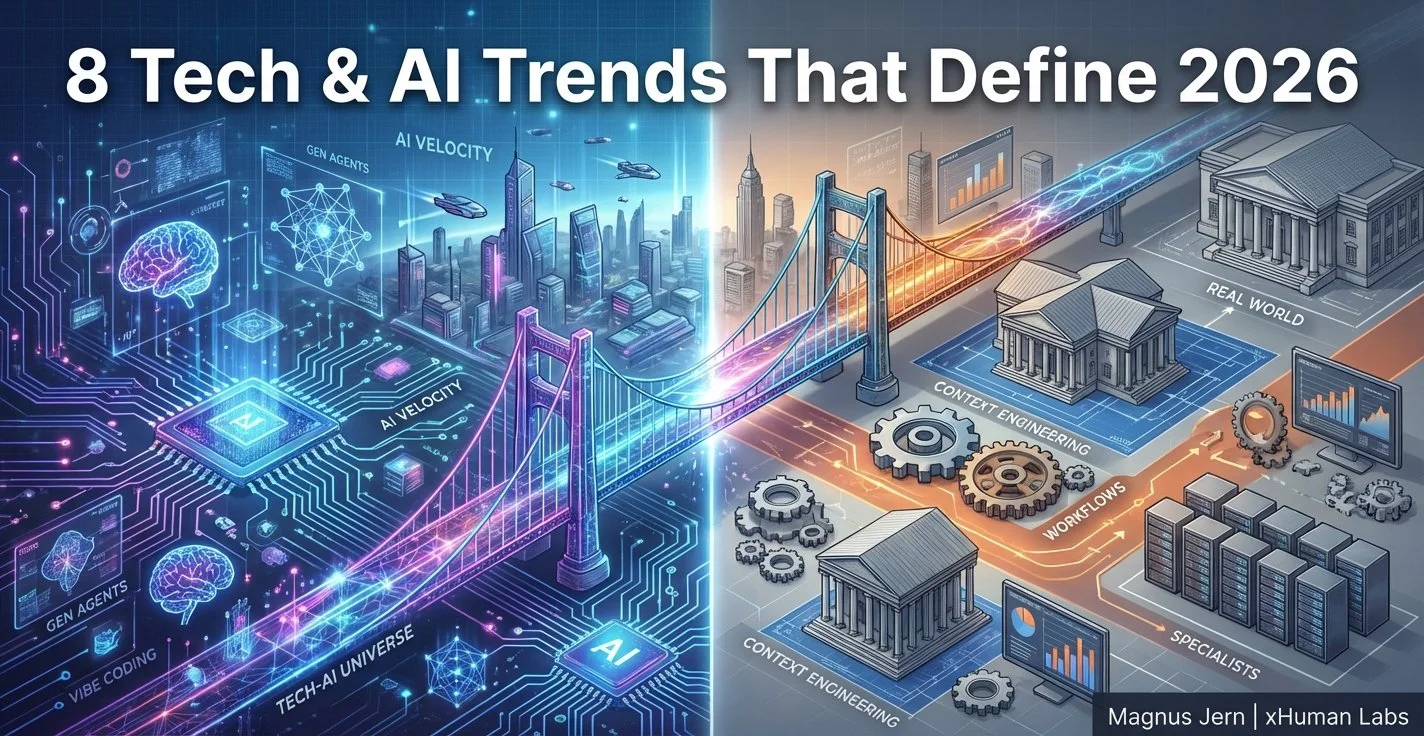
For the past 11 years, I have shared my analysis of the tech trends that will shape the coming year. This year was different. The pace of change has been so relentless that every time I finished a draft, a new model release (like Claude Opus 4.5) or a market shift forced a rewrite.
Below is the full text version but you can also consume the content in the following formats
Audio/Podcast version powered by NotebookLM - Note: I think you’ll enjoy this version
Presentation version powered by NotebookLM - Note: A bit cluttery but full of good illustrations
Presentation version powered by p30.ai - Note: Created with a beta version of the slideshow creater in P30 which provides much more consistency and customisation than NotebookLM
To truly understand the landscape of 2026, you must first accept that we are effectively operating in two parallel universes.
Universe 1: The Tech-AI Velocity In this world, startups ship enterprise-grade products in weeks. AI models actively trade on financial markets. Factories run with increasing autonomy. If you live here, it feels like we have already jumped a decade into the future.
Universe 2: The "Real World" Friction In this world, very little has changed. Schools, government agencies, and legacy enterprises still run on rigid hierarchies, endless meetings, and PowerPoint decks. Processes are manual, and change is viewed with suspicion.
2026 is not the year these worlds merge. It is the year the gap between them becomes impossible to ignore. It is the year where "business as usual" becomes a strategic liability.
Here are the 9 insights that define this moment, and more importantly, exactly what you should do about them.
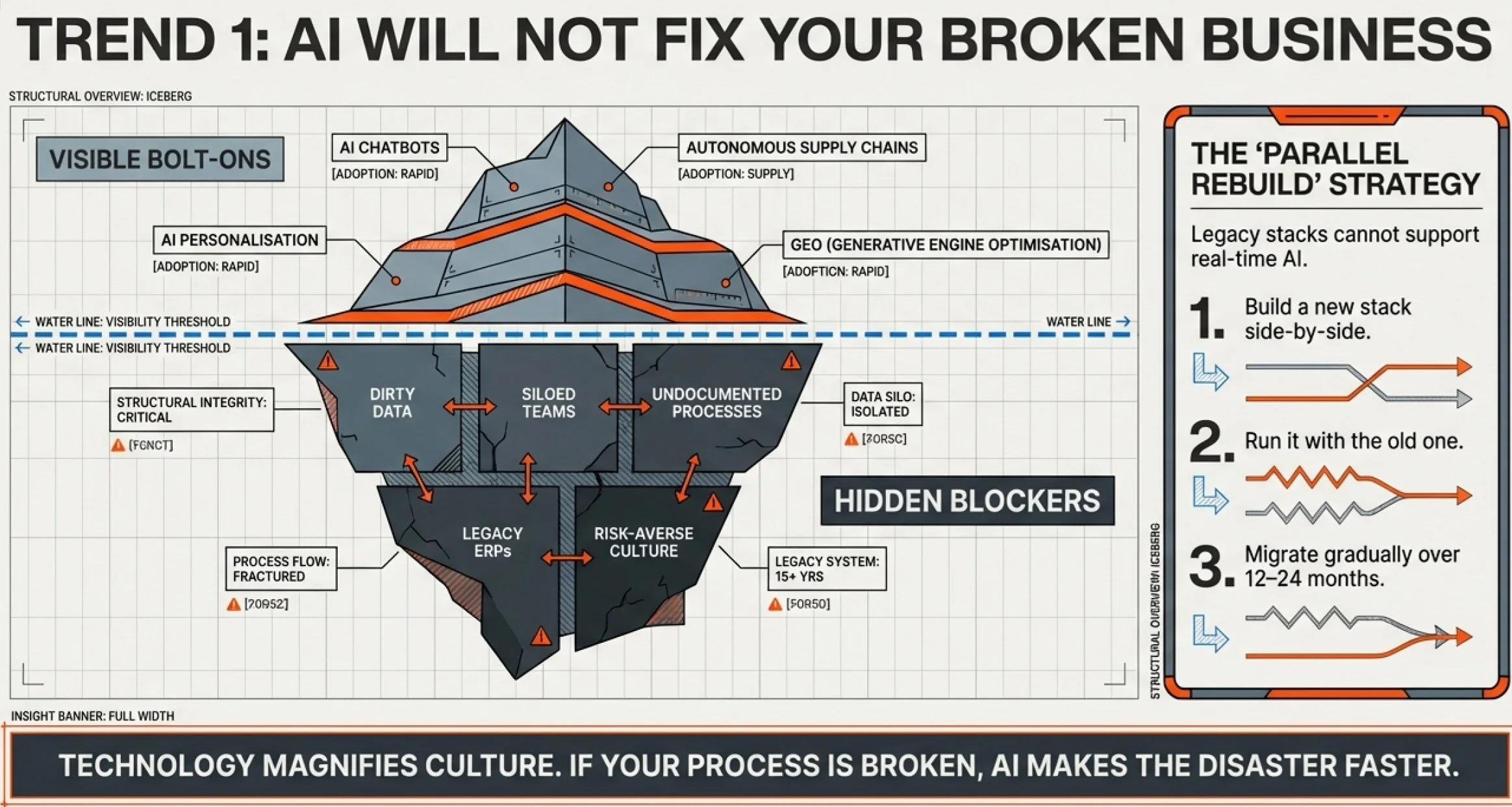
There is a dangerous misconception that AI is a magic wand that can be waved over a dysfunctional company to instantly modernize it. The reality in 2026 is harsh: AI is an accelerator. If you apply it to a messy, undocumented process, you simply get a mess that scales faster and costs more.
Most organizations have "dirty data," siloed teams, and processes that exist only in the heads of a few veteran employees. An AI model cannot automate a process that has never been defined.
The Insight: The winners in 2026 won't be the companies with the most expensive GPU clusters. They will be the companies that did the boring, unsexy work of cleaning their data and mapping their customer journeys.
Your Action Plan:
Audit Your "Truth": Before buying AI tools, audit your data. Is your customer data centralized? Is it accurate? If not, stop and fix this first.
Map, Don't Just Automate: Pick one core process (e.g., customer onboarding). Map it step-by-step. Identify the friction points. Only then apply AI to specific steps.
Document or Die: If a process isn't written down, it doesn't exist to an AI. Invest in "Context Documentation" -- clear, structured guides on how your business makes decisions.
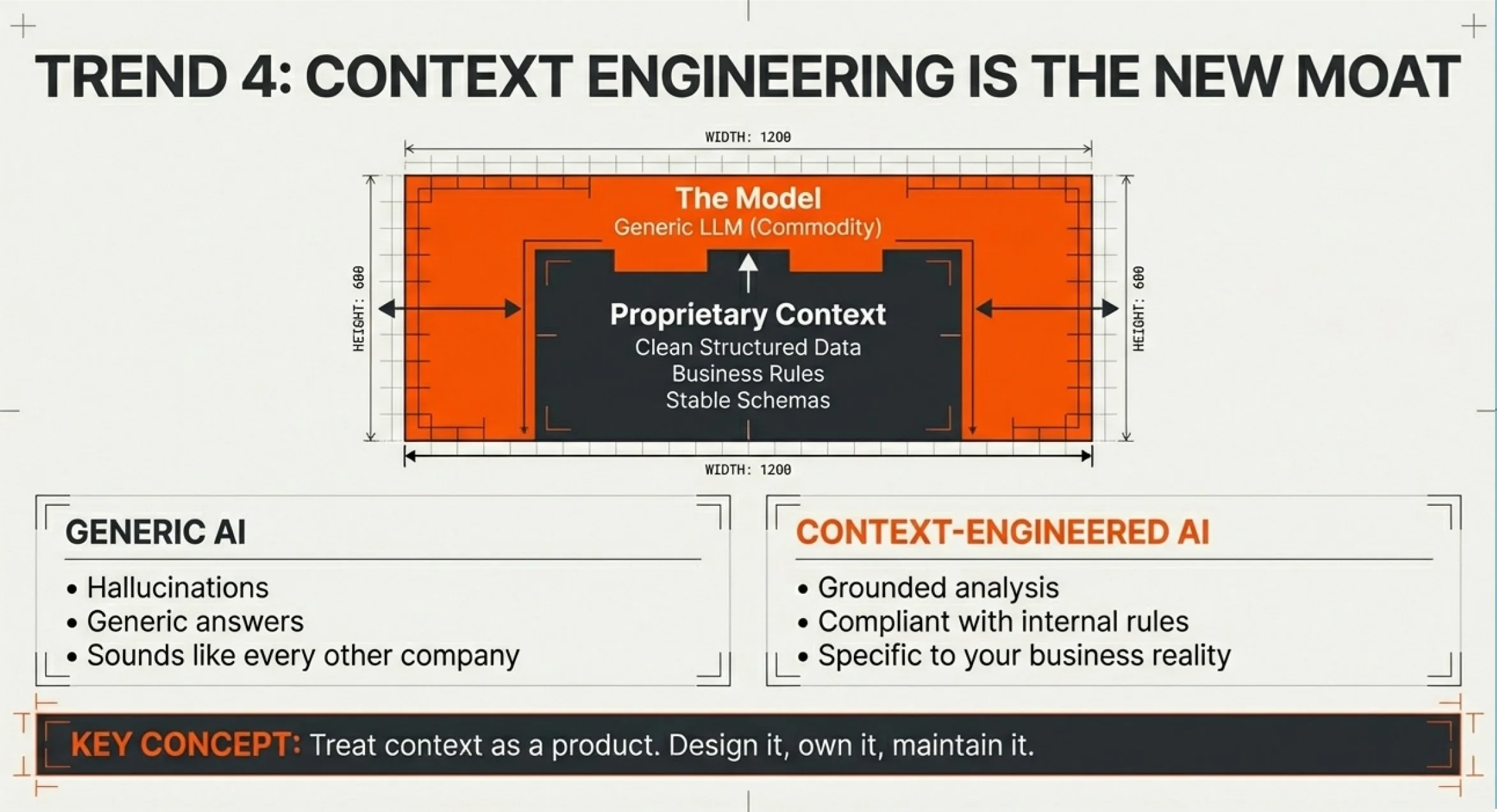
For the last two years, companies obsessed over which model to use. "Should we use GPT-5, Gemini, or Claude?" In 2026, the model is a commodity. Everyone has access to the same intelligence.
Your competitive advantage is no longer the AI itself; it is Context.
Context Engineering is the discipline of feeding AI systems the right information, at the right time, in a format they can understand. It goes far beyond simple "prompt engineering." It involves building technical architectures (like MCP - Model Context Protocol) that allow AI to safely access your live business data, brand guidelines, and historical decisions.
The Insight: A generic AI writes like a robot. An AI fed with deep context writes like your best employee.
Your Action Plan:
Treat Context as a Product: Assign a product owner to your internal knowledge base. Their job is to ensure the "brain" of the company is readable by AI.
Build "Decision Libraries": Don't just store data; store decisions. Record why a deal was lost or why a candidate was hired. Feed this to the AI so it learns your company's logic, not just its facts.
Invest in RAG (Retrieval-Augmented Generation): Ensure your tech stack allows AI to "read" your internal documents securely before answering a query.
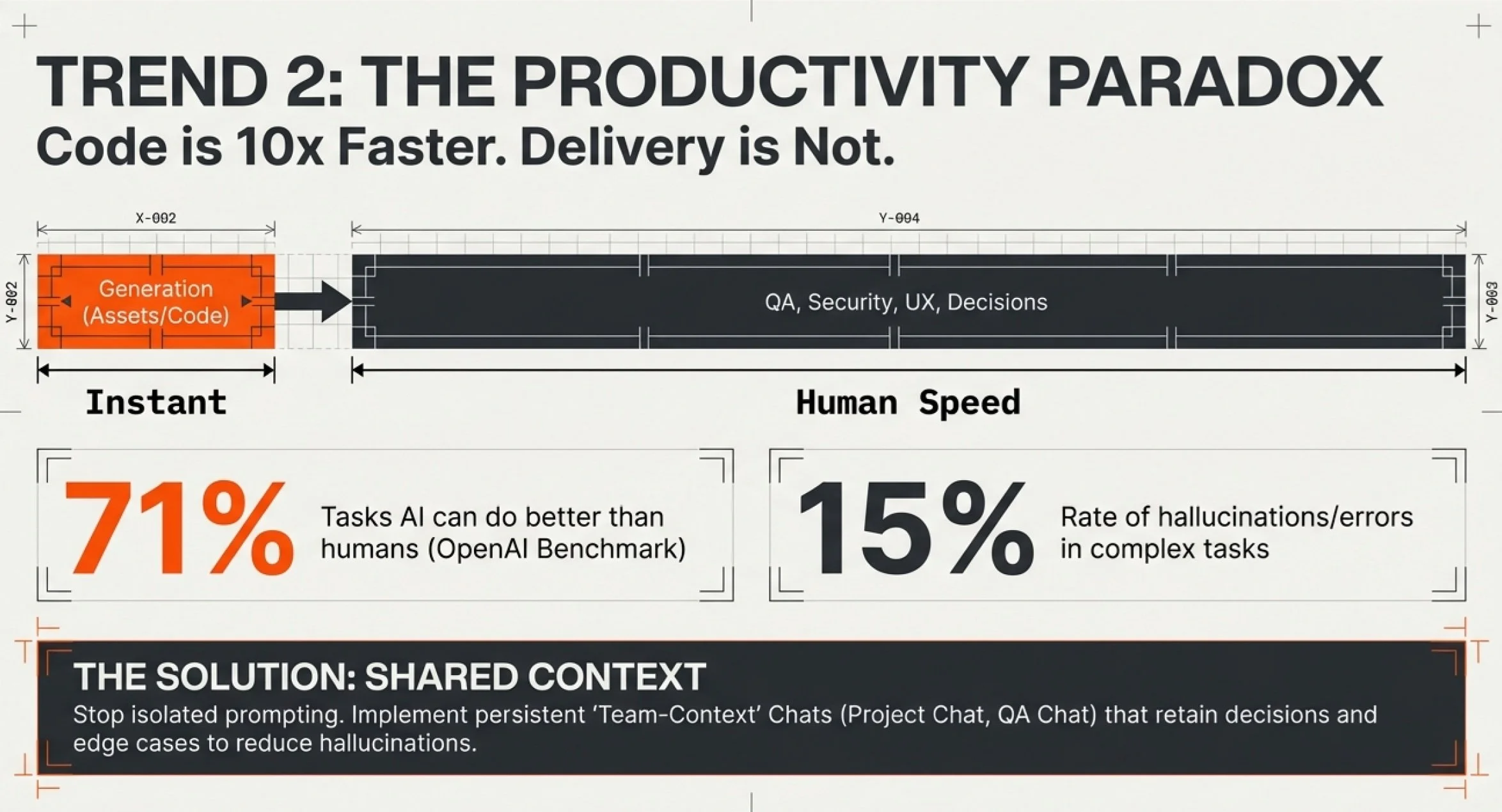
We have reached a point where AI can generate code, designs, and prototypes at incredible speeds. A developer with an AI assistant can write 500 lines of working code in minutes.
However, most companies are not shipping products 10x faster. Why?
Because the bottleneck has shifted. The constraint is no longer "writing the code." The constraint is now decision-making, quality assurance (QA), legal review, security compliance, and organizational alignment. We have built a Ferrari engine (AI coding) and put it inside a horse-drawn carriage (legacy management).
The Insight: Speeding up one part of the chain (coding) without fixing the rest (testing, approval) creates a pile-up of unfinished work.
Your Action Plan:
Parallel Workflows: Move away from "waterfall" approvals. Use AI to pre-check code for security and compliance while it is being written, not weeks later.
Empower QA with AI: Your QA team needs to move as fast as your developers. equip them with AI agents that can auto-generate test cases and stress-test applications instantly.
Measure "Time to Value": Stop measuring "lines of code written." Measure how long it takes for an idea to reach a customer. If that number isn't dropping, you are optimizing the wrong thing.
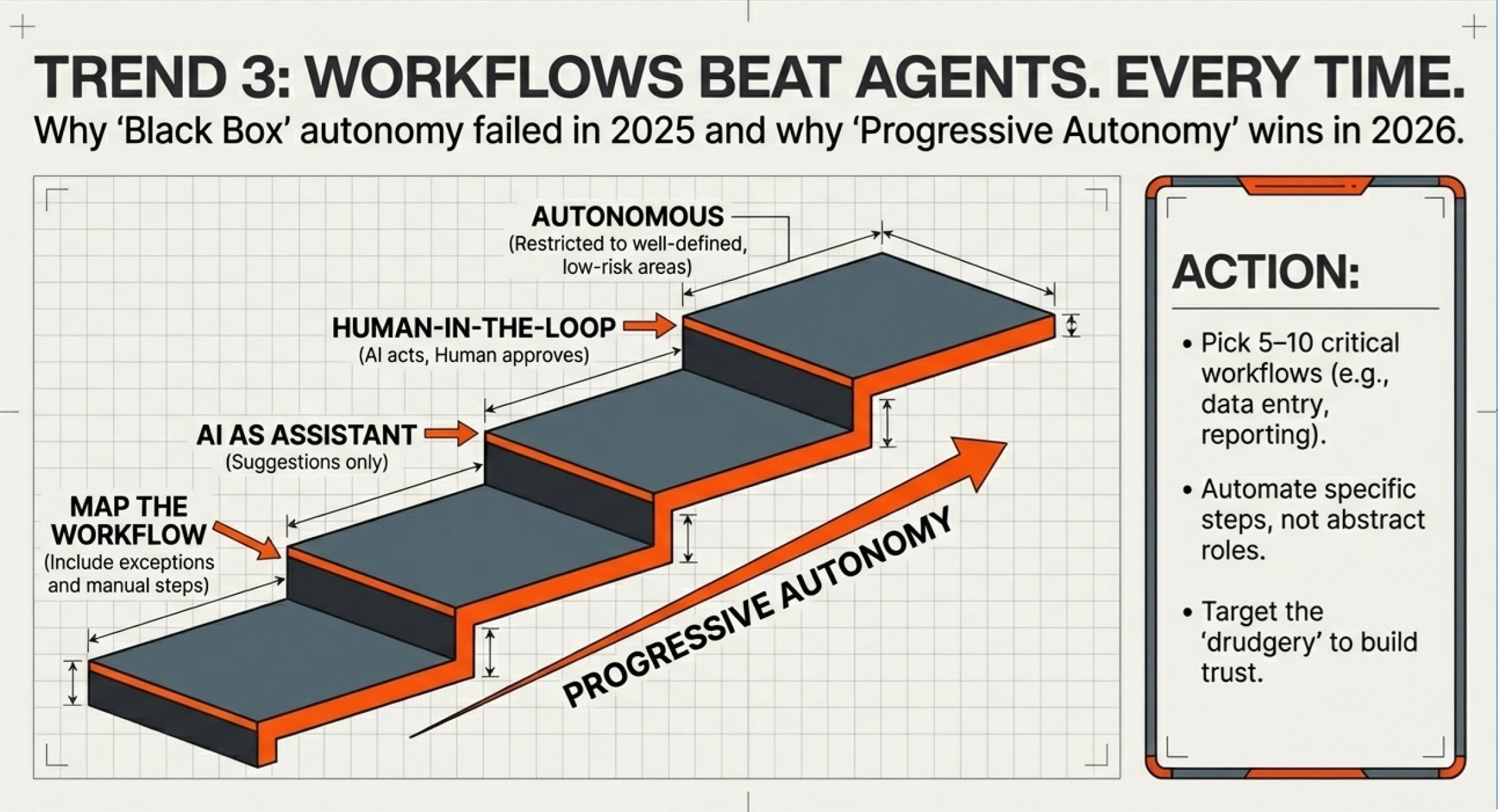
In 2025, the hype was all about "Autonomous Agents" -- AI employees that would run your marketing or sales entirely on their own. In reality, these "black boxes" terrified legal teams and frustrated managers because they were unpredictable.
In 2026, the winning pattern is Workflow Automation with Progressive Autonomy.
Instead of saying "AI, do my marketing," smart leaders are saying, "AI, draft the social posts for this week based on these three articles, and wait for my approval."
The Insight: Trust is earned, not installed. The most successful deployments start with "Human-in-the-Loop" and slowly move to "Human-on-the-Loop" (supervisory) only after the AI proves it is reliable.
Your Action Plan:
Kill the "Black Box": Do not deploy agents that don't explain their reasoning. Require your AI tools to show a "Chain of Thought" so humans can audit the decision.
The 80/20 Rule: Automate the 80% of the workflow that is repetitive (data entry, scheduling, initial drafting). Keep humans strictly focused on the 20% that requires judgment and empathy.
Start with "Busy Work": The best place to start is tasks employees hate (expense reports, meeting summaries). It builds morale and trust in the technology.
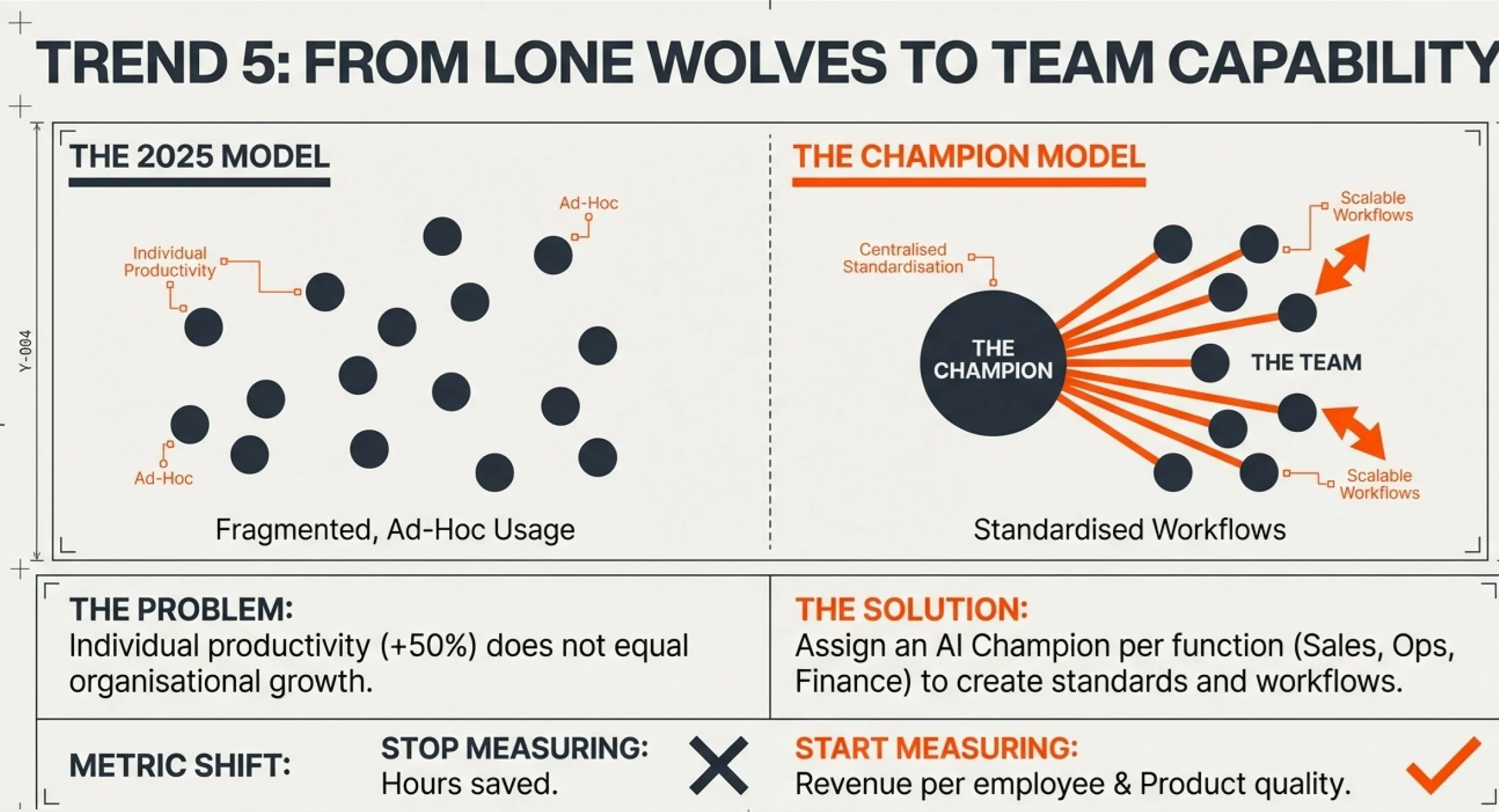
In Small and Medium Enterprises (SMEs), we often see "Lone Wolf" power users -- one person in marketing who is a wizard with Midjourney, or one dev who uses Cursor. They are individually highly productive, but when they leave, that capability leaves with them.
To survive 2026, SMEs must transition from individual AI usage to Team-Level AI Capability.
The Insight: AI must be a systemic muscle, not a personal superpower. If your sales process depends on "Dave knowing how to prompt ChatGPT," you don't have an AI strategy; you have a Dave strategy.
Your Action Plan:
Appoint AI Champions: In every department (Sales, HR, Ops), designate one person as the "AI Lead." Their job isn't to be a coder, but to curate the best prompts and workflows for their team.
Standardize the Toolset: Stop the shadow IT. Decide on a standard set of tools (e.g., P30.ai by xHuman Labs) that allows teams to share prompts, knowledge bases, and bots securely.
Share the Wins: Hold monthly "Demo Days" where teams show off a workflow they automated. Cross-pollinate ideas between departments.
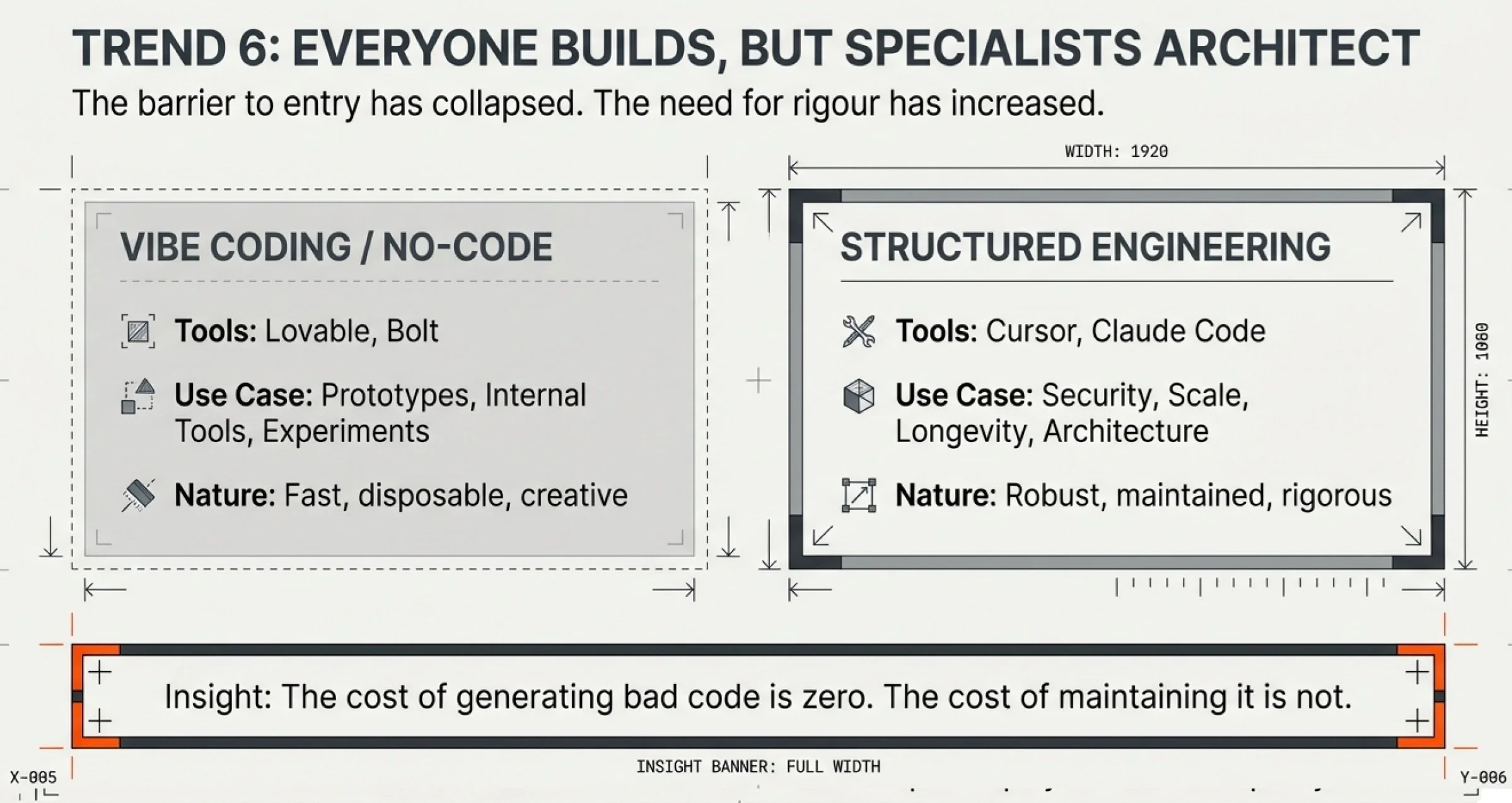
This is one of the most exciting shifts of 2026. "Vibe Coding" refers to the ability to build software primarily through natural language and iteration, without needing deep knowledge of syntax or architecture.
Tools like Lovable, Bolt, and Vibecode allow founders, product managers, and designers to say, "Make me a dashboard that tracks leads and looks like Airbnb," and get a working app in minutes.
The Insight: Vibe coding is perfect for Discovery. It allows non-technical people to validate ideas, build internal tools, and create prototypes without waiting for engineering resources.
Your Action Plan:
Unleash the Non-Coders: Give your Product Managers and Designers access to vibe coding tools. Let them build their own prototypes instead of writing 50-page requirement documents.
Use for "Disposable" Software: Need a registration page for a one-off event? A tracker for a temporary project? Vibe code it. It's fast, cheap, and disposable.
Know the Limit: Do not run your core enterprise billing system on vibe-coded apps. Know when to graduate a prototype to real engineering.
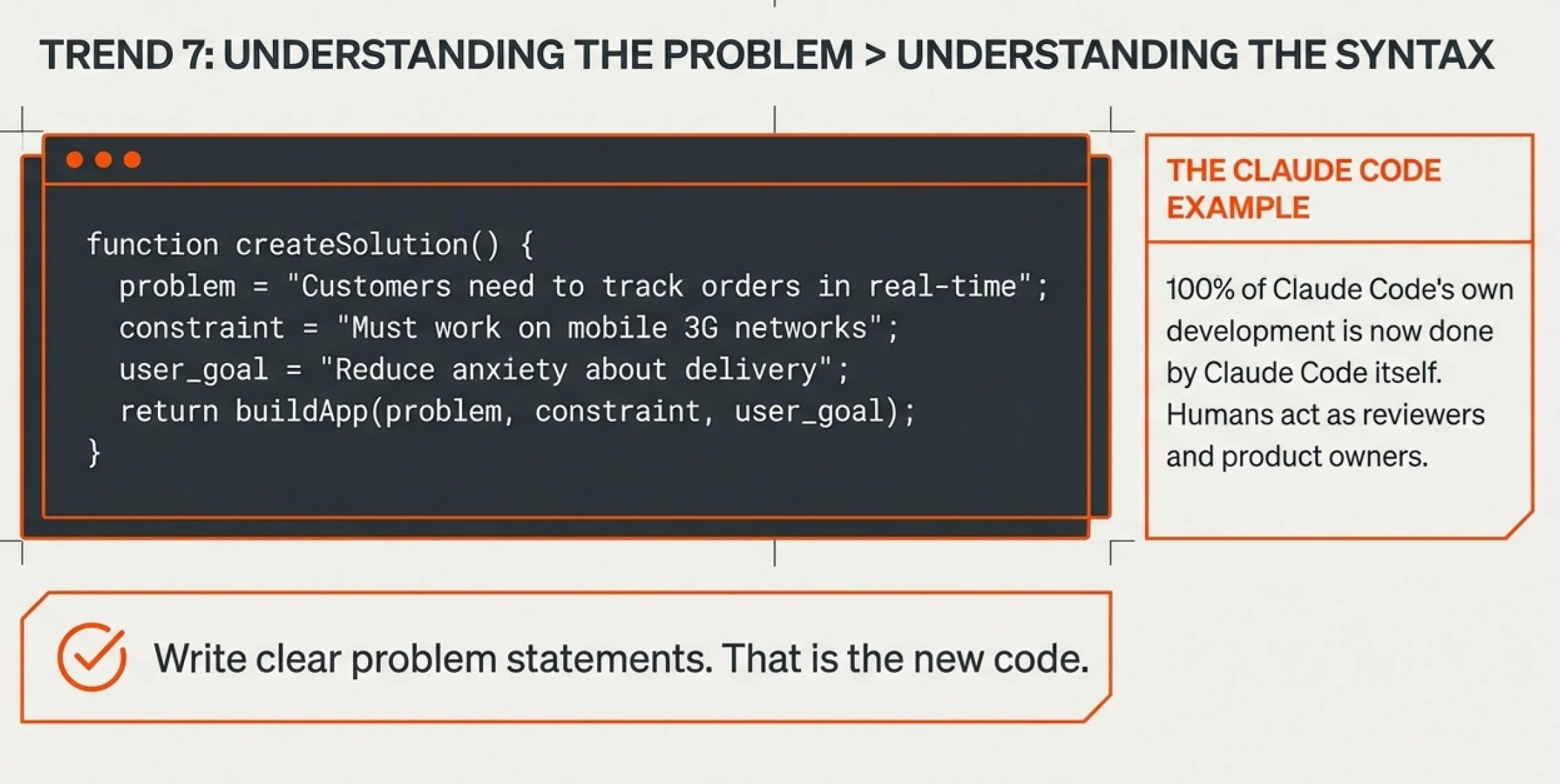
While vibe coding handles the simple stuff, Structured AI Coding is revolutionizing professional software engineering. This involves using deep integration tools (like Cursor or Claude Code) to manage massive, complex codebases.
Here, the AI acts as a super-senior pair programmer. But this creates a new paradox: Specialists are now more valuable than generalists.
Because AI can write generic code instantly, the value of a "junior generalist" has dropped. However, the value of a System Architect, Security Specialist, or Data Modeler has skyrocketed. Someone needs to understand what the AI is building, ensure it is secure, and design a scalable architecture.
The Insight: You don't need fewer engineers; you need better engineers. You need people who can audit AI output and think in systems.
Your Action Plan:
Hire for Architecture, Not Syntax: When hiring devs, test their ability to design a system and debug complex logic, not their ability to memorize syntax (the AI does that now).
Focus on Security: With AI generating code at speed, vulnerabilities can creep in faster. Invest heavily in security audits and automated scanning.
The "Reviewer" Mindset: Train your team to shift from "writers" of code to "reviewers" of code. This requires a higher level of seniority and attention to detail.
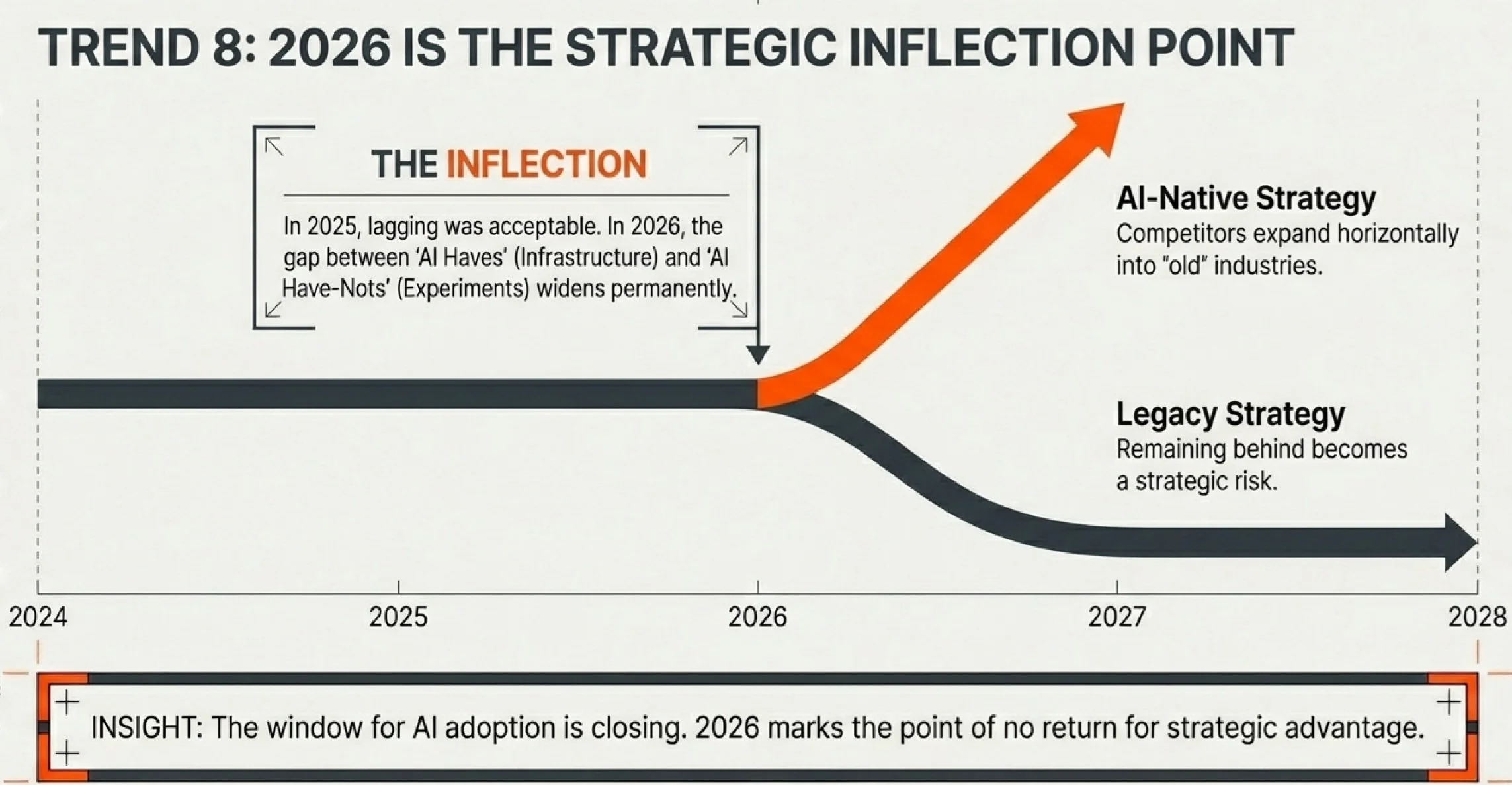
In 2025, you could ignore AI and still compete. In 2026, the "wait and see" approach becomes a terminal risk.
We are seeing AI-native companies enter traditional sectors -- logistics, law, accounting -- with cost structures that legacy firms cannot match. They don't have the baggage of old tech stacks or manual workflows.
The Insight: The gap between the "AI Haves" and "AI Have-Nots" is widening exponentially. Bridging this gap later will cost 10x what it costs today.
Your Action Plan:
Pick Your Battles: You don't need to transform everything at once. Pick 2-3 high-impact areas (e.g., Customer Support, Content Production) and commit to making them AI-native this year.
Budget for Experimentation: Set aside a "Failure Budget." Allow teams to try AI tools that might not work out. If you aren't failing occasionally, you aren't moving fast enough.
Strategic Intent: Leadership must send a clear message: "We are becoming an AI-enabled organization." Without top-down alignment, middle management will kill innovation to protect the status quo.
9. KISS - Keep It Simple, Stupid (repeated from 2025)
Avoid complexity by focusing on core use cases first. Simplify, test, and expand gradually. Over-engineered projects often fail.
The insight: Projects that take 6-12 months to deliver results with 100s of pages of specs results are likely to fail as it will be outdated before you even get up and running.
Start with limited scope true MVPs (Minimum Viable Product) and prototypes.
Final Words: This Is The Worst It Will Ever Get
I want to leave you with one thought that is both terrifying and liberating.
The AI tools you use today are the worst they will ever be.
They are the slowest, most expensive, and least capable versions you will ever encounter for the rest of your life. And yet, they are already transforming industries.
If you are struggling to get value from AI today, do not pause. Use the friction as a signal. It is telling you where your data is dirty, where your processes are broken, and where your culture is resistant.
Fix the foundation now. Because next year, the technology will be twice as fast, and you want to be ready to fly, not just trying to start the engine.
Magnus Jern xHuman Labs
P.S. If you want to discuss how to bridge the gap between these two universes then let's talk! xHuman Labs is an AI builder and integrator rather than AI strategist. We will get you up and running in a few weeks.